

Blog

Understanding the Flat Booking Process: A Guide for First-Time Buyers
October 28, 2026
Understanding the Flat Booking Process: A Guide for First-Time Buyers
Buying your first flat is exciting, but the process can feel confusing if you don't know what to expect. From the moment you shortlist a flat to the day you get the keys, there are several steps involved, each with its own paperwork, payments and waiting periods. This detailed guide breaks down the flat booking process step by step, so you know exactly what's coming next and can plan your time and money accordingly.
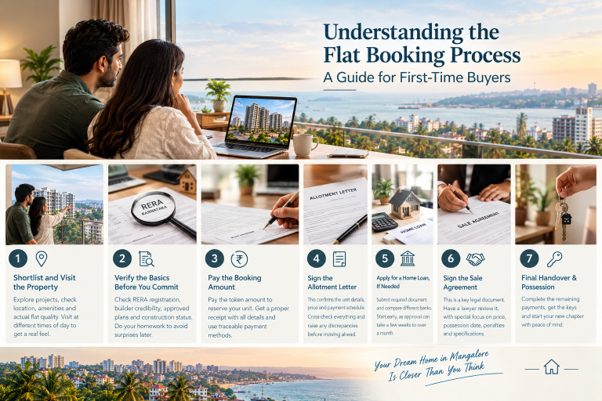
Step 1: Shortlist and Visit the Property
Start by shortlisting a few projects that match your budget, preferred location and family's current and future needs. Make a list of what matters most to you, such as number of bedrooms, proximity to schools or hospitals, floor preference, and amenities like parking or a gym. Visit each site in person rather than relying only on brochures or online photos, since these rarely capture real ventilation, noise levels or how the neighbourhood actually feels.
While visiting, walk through a sample flat if available, check the quality of fittings, and ask about the exact carpet area versus the super built-up area, as these can differ significantly. It also helps to visit at different times of day, since traffic, noise and sunlight can vary a lot between morning and evening.
Step 2: Verify the Basics Before You Commit
Before paying anything, do your homework. Check the project's RERA registration number on the official RERA Karnataka website to confirm it matches the builder's claims. Look into the builder's history, including how many projects they've completed, whether those were delivered on time, and what past buyers say about construction quality and after-sales support.
Ask for the approved building plan and confirm that the flat you're interested in matches it. If it's an under-construction project, ask for the current construction status, expected possession date, and whether there have been any delays in similar past projects by the same builder. This groundwork protects you from unpleasant surprises later in the process.
Step 3: Pay the Booking Amount
To hold your chosen unit, you'll typically be asked to pay a booking amount or token amount, usually a small percentage of the total flat price, often between 5,000 and a few lakh rupees depending on the project. This payment takes the unit off the market and reserves it in your name while you proceed with the rest of the paperwork.
Always insist on a proper, dated receipt that clearly states the unit number, the amount paid and the terms of the booking, including whether it's refundable and under what conditions. Avoid paying in cash; use a cheque, bank transfer or other traceable payment method so there's a clear financial record.
Step 4: Sign the Allotment Letter
After the booking amount is received, the builder issues an allotment letter, usually within a few days to a couple of weeks. This document confirms important details: the unit number, floor, carpet area, total agreed price, and the broad payment schedule tied to construction stages or a fixed timeline.
Read this letter carefully and cross-check every detail against what was discussed and promised verbally or in marketing material. If anything looks different, such as a changed unit, altered price, or vague payment terms, raise it with the builder immediately before moving to the next step.
Step 5: Apply for a Home Loan, If Needed
If you're financing your purchase, this is the stage to begin your loan application. Most banks will ask for your allotment letter, identity and address proof, income documents such as salary slips or IT returns, bank statements, and the builder's approval documents, including the project's RERA certificate and approved plan.
It's worth comparing two or three banks or housing finance companies, since interest rates, processing fees, loan tenure and the percentage of property value financed can vary meaningfully. Loan approval can take anywhere from a couple of weeks to over a month, depending on document readiness and the bank's internal process, so start early to avoid delays later in your payment schedule. Many banks also conduct a legal and technical verification of the property as part of this process, which can further validate the project's credentials.
Step 6: Sign the Sale Agreement
Once your loan is approved, or if you're self-financing, the next major step is signing the sale agreement, also called the agreement for sale. This is a comprehensive legal document that outlines the agreed price, detailed payment schedule, possession timeline, specifications of the flat including fittings and finishes, penalty clauses for delays, and the rights and responsibilities of both buyer and builder.
This document is arguably the most important one in the entire process, since it governs the relationship between you and the builder until possession. It is strongly advisable to have a lawyer review it clause by clause before signing, paying particular attention to the possession date, penalty terms if the builder delays, and the exact specifications promised for fittings and finishes.
Step 7: Make Payments as Per the Schedule
For under-construction flats, payments are typically linked to construction milestones, such as completion of the foundation, each floor's slab, or the finishing stage. This construction-linked plan means you pay gradually as the building progresses, which eases the pressure on your finances compared to paying the full amount upfront.
For ready-to-move flats, the payment structure is usually simpler, often involving a larger portion due at booking and the remainder closer to possession. Whichever structure applies, always pay through proper banking channels, never in cash, and keep every receipt and payment confirmation organised, ideally in both physical and digital form, for future reference.
Step 8: Property Registration
Once the agreed payment milestones are met, the next step is property registration, which formally and legally transfers ownership into your name. This involves signing the sale deed at the local sub-registrar's office, along with paying stamp duty and registration charges, which together typically add up to a notable percentage of the property's value, varying by state.
Both you and a representative of the builder, or their authorised signatory, need to be present for this process, along with the required documents, including the sale agreement, identity proofs and payment receipts. This step is mandatory under Indian property law and should never be skipped, even if the builder offers informal possession before registration.
Step 9: Take Possession
After registration, the builder arranges handover of possession, which usually includes the keys and essential documents such as the occupancy certificate, which confirms the building is legally fit for habitation. Before accepting possession, conduct a thorough inspection of the flat, checking walls, flooring, electrical fittings, plumbing and common areas for any defects or incomplete work.
Prepare a written snag list of any issues found and share it with the builder, getting a clear commitment and timeline for repairs before you sign the final handover documents. Only sign off on possession once you're satisfied that major issues have been addressed or formally acknowledged in writing.
Step 10: Transfer Utilities and Update Records
Once you've moved in, transfer utility connections like electricity and water into your name through the respective local authorities, and update your address on important documents like your bank accounts, Aadhaar and voter ID. If the building comes under a homeowners' association or society, complete the necessary membership registration, since this governs ongoing maintenance charges, common area rules and future decision-making for the building.
It's also a good idea to keep a dedicated file, physical or digital, with all property-related documents together, including the sale deed, loan documents, payment receipts and warranty cards for fittings, so everything is easy to access if needed later for resale, insurance or legal purposes.
A Detailed Checklist for First-Time Buyers
- Verify RERA registration and builder reputation independently before booking.
- Insist on proper receipts for every payment, including the initial token amount.
- Read the allotment letter and sale agreement carefully, ideally with a lawyer's help.
- Start your home loan process early, since approval can take several weeks.
- Track your payment schedule closely and always pay through traceable banking channels.
- Inspect the flat thoroughly and prepare a written snag list before taking possession.
- Complete registration and utility transfers promptly to secure full legal ownership.
Start Your Home-Buying Journey with Land Trades
At Land Trades, we guide first-time buyers through every step of the flat booking process, from the first site visit to final possession, with clear communication and support at each stage. Our experienced team is happy to answer your questions and simplify the paperwork along the way. Contact us today or visit our website to explore our current projects and book a site visit.
TO CONNECT WITH LAND TRADES, CALL OR WHATSAPP -
9880742159 | 9845084866 | 9611531026
Land Trades Builders & Developers
'Milestone25', 5th Floor,
Collectors Gate Junction, Balmatta
Mangaluru – 575002
Phone: +91 8882777444
E-mail: sales@landtrades.in
Visit website: www.landtrades.in